Because of the many issues within it, a room seldom has that “tired” feeling. The most prevalent issues are often the larger, more apparent problems and can be: poor lighting, clutter on flat surfaces, scuffed baseboards, worn fabrics or a layout that causes frustration in performing everyday activities. Therefore, a good weekend re-fresh addresses these issues first and foremost rather than addressing them through a failed shopping experience.
How you go about decorating your home can affect your pocketbook as much as your home itself. By editing things, repairing things, putting in new lighting, and then spending on 3-5 final items, you will often be able to create a more significant visual impact with less money. More practically, you could designate one main room, have a two-day timeline, set a limit on your spending, and create a plan so you can use the room more effectively by Sunday night.
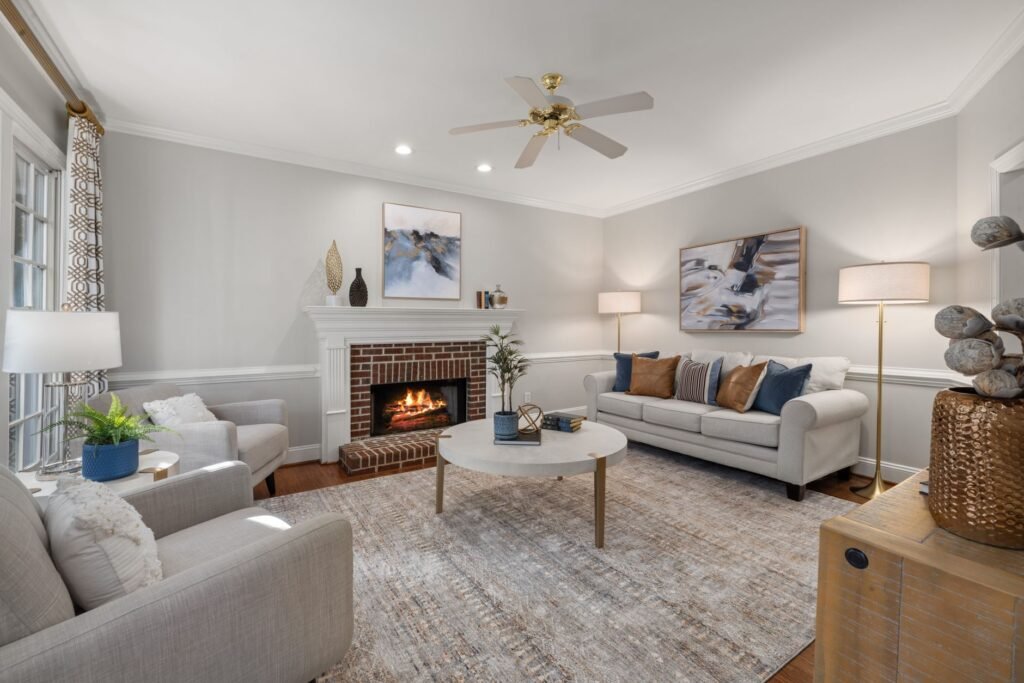
- Pick one room first. Most failed refreshes come from spreading a small budget across too many spaces.
- Use the Fresh-Start Scorecard below to choose the room with the most visible problems and the most daily use.
- Spend in this order: edit clutter, clean the backdrop, repair wear, improve lighting, then add a few soft or decorative pieces.
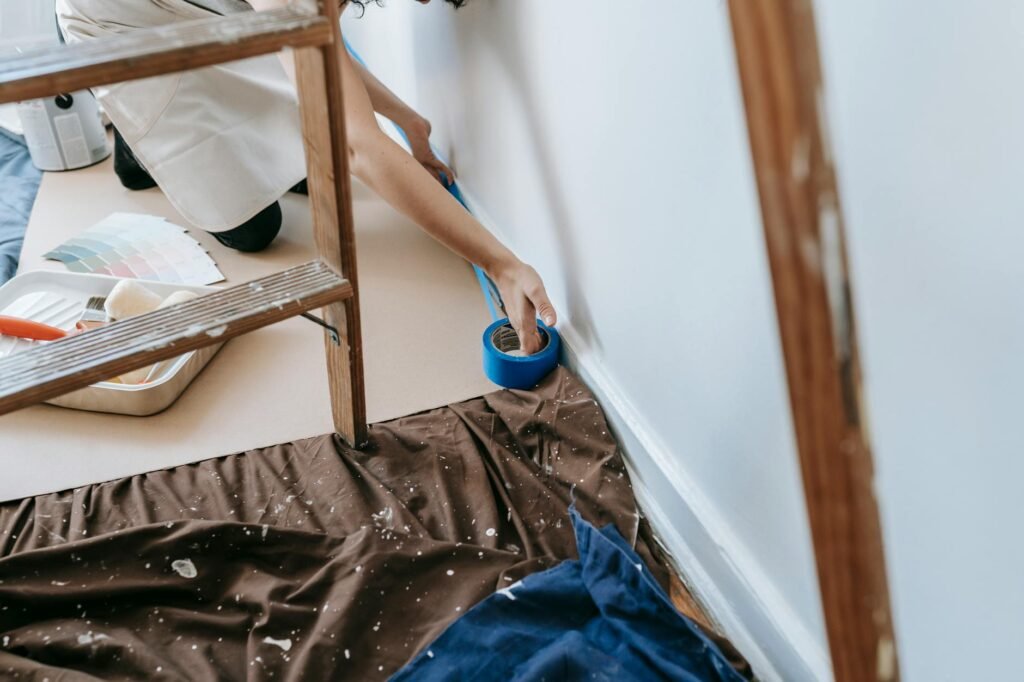
- Keep paint projects small enough to finish and air out over one weekend.
- Pause DIY and call for help if you are dealing with old paint, electrical problems, moisture, mold, or lease restrictions.
This article is for general information. Costs are illustrative and vary by market. Get landlord approval before making permanent changes, and use a qualified professional for lead-related, electrical, structural, or moisture issues.
Use the Fresh-Start Scorecard before you shop
The easiest way to throw away money is to renovate the wrong room. This scorecard has six categories for you to evaluate each of your rooms. You’ll provide each room with a score of 0, 1, or 2 for each of these categories. In addition to that, if a room affects both the beginning of your day and the end of your day (for example, a kitchen, living room, main bathroom, main entrance, or master bedroom), then you will give it one more point for “Morning and Night.” The highest total should be the room you live in on the weekend.
| Category | 0 points | 1 point | 2 points |
|---|---|---|---|
| Light quality | Pleasant and consistent | A little dim or uneven | Harsh, dingy, mismatched, or too dark |
| Visible clutter | Most surfaces stay clear | One regular trouble spot | Several surfaces are crowded from the doorway view |
| Surface wear | No obvious scuffs or damage | Minor nicks, nail holes, or worn caulk | Peeling paint, chipped trim, or visible neglect |
| Soft goods | Textiles still help the room | One item feels tired | Curtains, pillows, towels, or bedding drag the room down |
| Layout friction | Easy to walk through and use | One awkward path or reach | The room makes daily tasks harder |
| Comfort | Feels neutral | Slightly drafty, stuffy, or echoey | Persistent glare, draft, odor, or discomfort |
Two decision rules make this more useful. First, if your budget per room falls below about $75 after tax, do not split the project across multiple spaces. Second, if two rooms tie, choose the one you use most often when you are tired. That is usually where a refresh pays off fastest.
The 48-hour refresh plan
- On Friday evening, take three pictures at the entrance, document your top three irritators, record the measurements of anything you are considering buying, create a definitive budget, including a very small allowance for taxes, tape, hooks/screws as well as potential returns.
- Saturday morning: Empty visible surfaces and make four piles: keep here, move elsewhere, donate, trash. The goal is not to reorganize every drawer. It is to remove visual drag from the room.
- Late morning Saturday: Get the background areas of the room cleaned. Dust off your lamps/shades, wipe down mirrors, clean cabinet fronts or nightstands, vacuum the edges of the floors, wipe down baseboards that prmarily face or are in the area where people see them easily and launder any washable textiles.
- Afternoon on Saturday: Fix signs of neglect. Fill nail holes, touch-up trim, secure loose hardware, straighten up crooked wall decorations, replace light bulbs that don’t work or match each other, and fix small gaps or cracked caulk give an older appearance than age.
- Do the following on Saturday evening: (1) Determine the layout before you make any additional purchases. (2) The largest item goes first, clear off the walking path, hide wire/cables. (3) Choose one item to be your “focal point”; your room has to work together, not against each other.
- On Sunday mornings, create deliberate comfort in your home: new pillow covers, new shower curtains, a new serving tray, a storage basket for daily use supplies and/or a new lamp will help to make your space feel warm and inviting. A unified colour palette will give the room an edited appearance versus one that is not freshly crowded.
- Sunday afternoon: Finish the practical upgrades. Steam curtains, install weatherstripping or a door sweep if needed, swap switch plates or hooks if allowed, and return only a few objects to display.
- Sunday evening: Take after photos from the same spot, compare them with the before photos, and return or skip any purchase that did not solve a clear problem.
Spend where the eye lands first
Better every day solutions are generally what offer the best refresh expenditures rather than flashy items. For most of the rooms in your house this will be achieved with improved lighting, clear sightlines, updated fabrics, minor repairs, and one or two solutions for storage to prevent clutter from returning.
| Move | Typical spend | Time | Best payoff when | Skip it when |
|---|---|---|---|---|
| LED bulbs and lamp reset | $20 to $80 | 30 to 60 minutes | The room looks dim, yellow, or inconsistent | The fixture itself is broken or undersized |
| Patch and touch-up paint or trim | $15 to $60 | 1 to 3 hours plus dry time | Scuffs and small damage are easy to see | Walls need major prep or a full repaint |
| Curtain, shower curtain, or pillow-cover swap | $20 to $90 | 30 to 90 minutes | Textiles make the room feel dated | The real problem is layout or storage |
| Hardware, hooks, or switch plates | $10 to $70 | 20 to 60 minutes | The room feels bland or builder-basic | You have not measured or your lease forbids changes |
| Basket, tray, or one drawer organizer | $10 to $50 | 15 to 30 minutes | One visible clutter zone keeps returning | You are trying to store too much for the room |
| Weatherstripping or door sweep | $10 to $35 | 30 to 60 minutes | A room feels drafty or noisy | The door or window is damaged and needs repair |
| Small-area paint project | $25 to $100 | 2 to 6 hours | One tired surface is dragging the room down | You cannot ventilate the room or get permission |
Lighting is one of the few refresh moves that can make a room look better now and cost less to run later. The Department of Energy says residential LEDs use at least 75% less energy and can last up to 25 times longer than incandescent bulbs. DOE also describes caulking and weatherstripping as simple, cost-effective air-sealing techniques with quick returns that are often around a year or less. (energy.gov)
If paint is part of your reset, treat ventilation as part of the job, not as an optional extra. EPA notes that some products sold as “no VOC” or “low VOC” can still contain volatile organic chemicals of concern, so label language is not a full safety screen. Open windows, use exhaust fans when you can, and give the room time to air out after painting. (epa.gov)
If the home was built before 1978 and you see peeling, chipping, or damaged paint, do not treat sanding or scraping as a casual cosmetic step. EPA says older homes are more likely to contain lead-based paint, and renovation work can create dangerous lead dust. Use lead-safe practices or bring in an EPA-certified professional. (epa.gov)
For cleaners, simple is usually enough. CDC says routine cleaning with soap or detergent is the first step, and disinfecting at home is usually unnecessary unless someone is sick. If you want easier label-shopping, EPA’s Safer Choice program identifies products with ingredients reviewed for human health and environmental safety. Never mix bleach with other cleaners; CDC warns that this can create dangerous vapors, and good ventilation matters when using bleach indoors. (cdc.gov)
Renters can still receive most of the visual rewards. Consider the following items when making your rental a home: focus on lighting, textiles, trays, baskets, cord management, removable art, and deep-cleaning. Save permanent hardware, paint, drilling shelving, and peel-and-stick items until you know what is allowed under your lease.

A $275 room reset that actually changes the feel of the space
Consider a 12-by-14 living room in a rental townhouse. The sofa and rug are staying. The problems are familiar: one lamp gives off a cool blue light, the overhead bulb is too yellow, the patio door leaks a draft, the coffee table collects chargers and mail, the curtains hang awkwardly, and the baseboards are visibly scuffed. The household sets a hard cap of $275.
- Six matching warm-white LED bulbs: $26
- Weatherstripping for the patio door: $18
- Spackle, small trim brush, and paint for touch-up: $32
- Cord clips, a tray, and a catchall box for mail and remotes: $29
- Two pillow covers and one throw: $46
- Curtain rings, hem tape, and a small steaming accessory: $24
- Large basket for blankets and homework supplies: $28
- Reserve for tax, returns, and extra hardware: $72
Throw pillows or throw pillows don’t create the largest difference. It’s through seeing matches in light bulbs, sealing drafts, patching up scuffed surfaces, giving unrestricted items homes, and removing piles of “possibly” decorative object that never seemed intentional, all creating a room that feels brighter, calmer and more expensive by having visible noise reduced and functions increased. This is what I mean by an effective refresh: only buying what has been earned by the space.
When the quick fix is not enough
In certain instances, renewing the room proves an impossible task, having an issue larger than the design to contend with. When the room fills quickly with clutter, it is not the case of needing more decorative baskets, but rather needing to decimate the number of items (or perhaps more closed storage). If there is an odour of mildew in your room, the paint is peeling/bubbly, or there are continuing stains on the carpet, you have an issue with moisture in the room; therefore, first, address the cause of the moisture before considering other problems. Should you put in a new lamp and the surfaces are clean, but the room still feels cramped, there is an issue with your furniture size/layout that needs to be re-evaluated.
- If money is tight, use the No-Regret Four in this order: edit, clean, relight, seal.
- If painting is not possible, shift the color and softness with curtains, bedding, towels, pillow covers, or a better lampshade.
- If you need storage, buy one larger solution that truly contains the mess instead of several small bins that still leave everything visible.
- If the room has mold, active leaks, loose outlets, damaged windows, or unstable flooring, pause the cosmetic work and call the landlord or a licensed professional.
- If the project keeps expanding, cut it back to one sightline and one function. A refresh should solve a room problem, not become a mini renovation.
Common mistakes that waste the budget
- Shopping before you take measurements, photos, and a hard look at the room in daylight and at night.
- Buying decor for a room that really needs better light, repaired trim, or less clutter.
- Mixing bulb colors so the room looks flat, gray, or oddly patchy after dark.
- Keeping too many small objects on display and then trying to fix the chaos with more containers.
- Starting a whole-room paint job late in the weekend when you only have time for a touch-up project.
- Using open storage for everything, which often makes the room look more organized for a day and more crowded after a week.
- Ignoring lease rules, damaged old paint, or clear signs that a problem is beyond cosmetic DIY.
How to audit the result before you spend more
- Do the doorway photo test. Compare the before and after shots from the same spot. If the room barely looks different, your next dollar should go to a more visible fix, not another accessory.
- Do the morning and night light test. A room that looks fine at noon can still feel dull or harsh after sunset. Adjust bulbs and lamp placement before buying more decor.
- Conduct a proper friction test by sitting on the floor and walking around the room, closing all curtains as you would use them each day, and selecting things you commonly USE every single day to remove from the main good surface. This makes the house function more effectively not only because they are better photographed (or not).
- Do the three-minute reset test. If visible surfaces cannot be cleared in about three minutes, the storage plan is still weak.
- Do the spending test. List every purchase and the specific problem it solved. Return anything that does not have a clear answer.
- Do the seven-day hold. Wait a week before making any finishing-touch purchases. Most rooms reveal their real remaining need after a few normal days of use.
Bottom line
Normally, the most inexpensive option for creating a new feeling for your space is to not replace everything in that space. Instead, you should identify those few things within each room that make the room look worn or operate poorly; take care of those things in the appropriate order; and quit before the project becomes an unrestrained spending frenzy. If you assess the room fairly, place a ceiling limit on your budget, and keep function as your primary objective instead of decor, in just one weekend you can dramatically alter how the space feels.
FAQ
Which room should I refresh first if my whole home feels tired?
Choose a room that receives the highest Fresh Start Score as well as the greatest daily usage first. If there is a tie, select the room that most affects your daily habits when you’re tired or rushing about, such as your kitchen , living room , foyer , main bathroom , or master bedroom .
How much should a weekend home refresh cost?
A solid one-room reset often fits in the $100 to $400 range if the main furniture stays. Under about $150, keep the project to one room and focus on editing, cleaning, bulbs, small repairs, and one textile or storage upgrade.
Is paint worth including in a two-day refresh?
Sure, but do not do anything significant; a small amount of touch-up work, such as painting trim, a door, or one wall can usually be finished in a weekend. A full-room repainting is only justified if it is easy to empty the room, you provide adequate ventilation, and you will not be left with an unfinished project or larger-than-expected project once completed.
What can renters do without risking the security deposit?
Begin with reversible modifications such as light fixtures, lamps, window coverings, linens (including bedding and towels), trays, baskets, cord management, and removable artwork options based on your lease contract. You should obtain written consent before making any of the following modifications: painting, drilling holes, replacing any permanent hardware, or using any adhesive product that could potentially damage any hard surface.
When should I stop DIY and bring in help?
Stop when the problem looks structural, electrical, moisture-related, or potentially hazardous. Old painted surfaces in homes built before 1978 may require lead-safe handling, and damaged windows, active leaks, loose outlets, mold, or unstable flooring are better handled by a landlord or licensed professional. (epa.gov)
References
- Department of Energy: LED Lighting – https://www.energy.gov/energysaver/led-lighting
- Department of Energy: Air Sealing Your Home – https://www.energy.gov/energysaver/air-sealing-your-home
- US EPA: How can I tell if my home contains lead-based paint? – https://www.epa.gov/lead/how-can-i-tell-if-my-home-contains-lead-based-paint
- US EPA: Lead Abatement, Inspection and Risk Assessment – https://www.epa.gov/lead/lead-abatement-inspection-and-risk-assessment
- US EPA: Does EPA regulate volatile organic compounds (VOCs) in household products? – https://www.epa.gov/indoor-air-quality-iaq/does-epa-regulate-volatile-organic-compounds-vocs-household-products
- US EPA: Addressing Indoor Environmental Concerns During Remodeling – https://www.epa.gov/indoor-air-quality-iaq/addressing-indoor-environmental-concerns-during-remodeling
- CDC: When and How to Clean and Disinfect Your Home – https://www.cdc.gov/hygiene/about/when-and-how-to-clean-and-disinfect-your-home.html?CDC_AAref_Val=https%3A%2F%2Fwww.cdc.gov%2Fhygiene%2Fcleaning%2Fcleaning-your-home.html
- CDC: Cleaning and Disinfecting with Bleach – https://www.cdc.gov/hygiene/about/cleaning-and-disinfecting-with-bleach.html
- US EPA: Safer Choice – https://www.epa.gov/saferchoice